Cover Page

VOCABULARY ADVENTURES

A Comprehensive Interactive Encyclopedia Spanning Ten Essential Domains

[Active Learning Study Portal]

An immersive structural journey filled with visual study boards,
advanced technical terminology dictionaries, and exactly 30 interactive workbooks.

Syllabus aligned to course curriculum criteria defined in structural source: Book (3).txt

Syllabus Index:

1. Kitchen Tools  •  2. Foods & Produce  •  3. Drinks & Beverages  •  4. Fashion & Clothing  •  5. Jobs & Professions
6. Countries & Capitals  •  7. Global Geography  •  8. Sports & Aerodynamics  •  9. Medicine & Health  •  10. Cosmos & Space
UKML

Contents & Learning Path

Interactive Vocabulary Domains

Workbook Directory
ID Topic Domain Focus Area Syllabus Page
01 Kitchen & Culinary Tools Handheld Prep, Appliances Page 3
02 Foods & Produce Grains, Fresh Greens, Proteins Page 6
03 Drinks & Beverages Hot Infusions, Chilled Servings Page 9
04 Fashion & Clothing Wearables, Textures, Accessories Page 12
05 Jobs & Professions Modern Tech, Career Pathways Page 15
06 Countries & Capitals Sovereign States, Geopolitics Page 18
07 Global Geography Oceans, Cartography, Continents Page 21
08 Sports & Aerodynamics Physical Sciences, Projectiles Page 24
09 Medicine & Health Pathology, Diagnostics, Human Body Page 27
10 Cosmos & Space Galactic Structures, Exploration Page 30
UKML

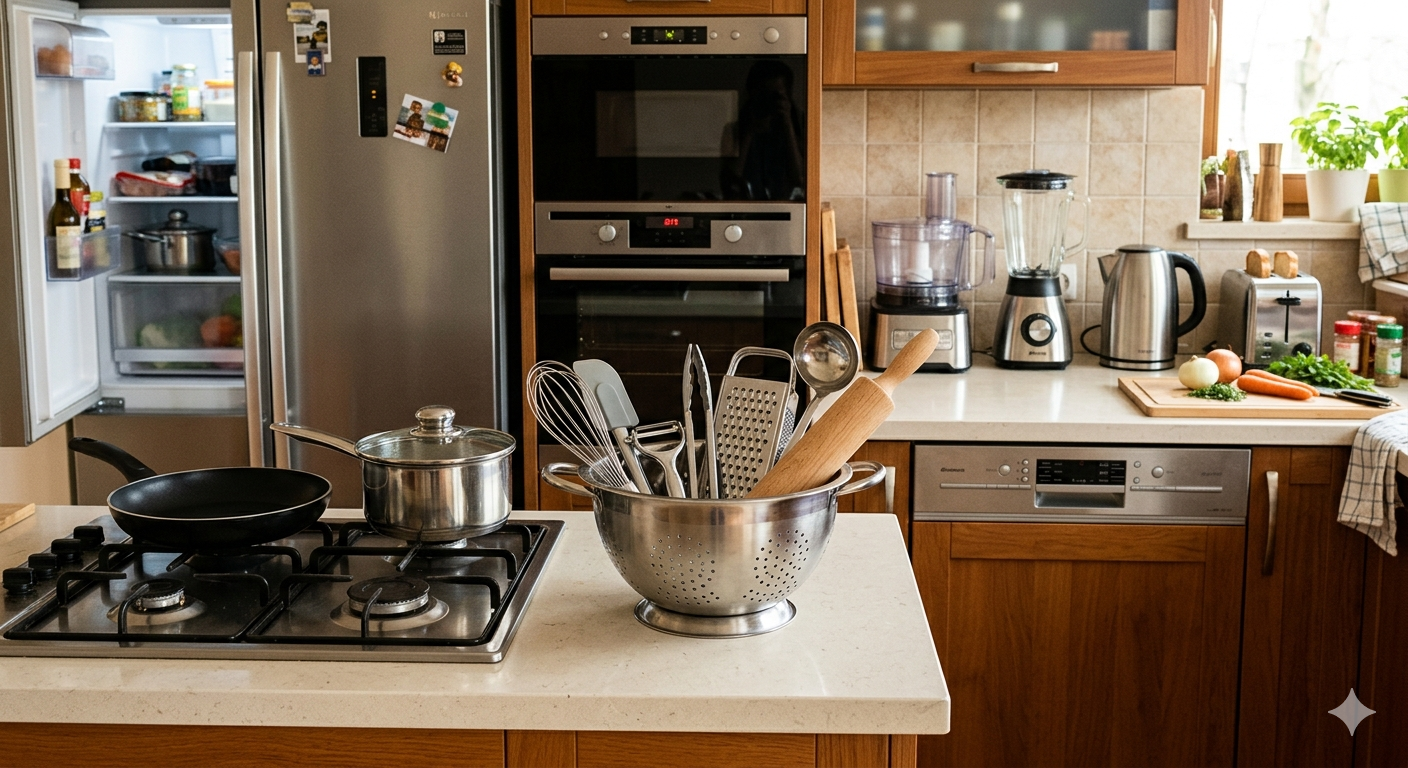
Topic 1: Kitchen & Culinary Tools

Kitchen Utensils, Tools, and Appliances

Kitchen Tools
Everyday Utensils & Cookware
  • Spatula: Flat, flexible implement used for mixing or scraping.
  • Whisk: Curved wire loops used to beat eggs or cream.
  • Peeler: Specialized blade to slice away vegetable skins.
  • Tongs: Two-armed instrument for grasping hot food.
  • Ladle: Deep-bowled spoon to serve soups or stews.
  • Skillet: Flat-bottomed pan for frying and browning.
  • Saucepan: Deep cooking pan, typically with a lid.
  • Colander: Bowl with small holes for draining liquids.
  • Grater: Metal tool to shred cheese or vegetables.
  • Rolling Pin: Smooth cylinder to flatten dough.
Large Kitchen Appliances
  • Refrigerator: Powered cabinet keeping raw foods fresh.
  • Oven: Insulated heating chamber for baking and roasting.
  • Microwave: Appliance heating foods via electromagnetic radiation.
  • Blender: Electric machine liquefying foods with blades.
  • Toaster: Small appliance designed to toast sliced bread.
  • Dishwasher: Automated device to wash cooking ware.
  • Food Processor: Machine used to chop, shred, and mix foods.
  • Kettle: Container with a spout for boiling water.
UKML

Topic 1 Practice: Vocabulary & Grammar

Exercise 1: Vocabulary Match

Match the vocabulary word on the left with its correct definition on the right.

WordAnswerDefinition / Characteristic
1. Whisk[ ]A. Perfect for draining water away from boiled pasta or noodles.
2. Colander[ ]B. A flat tool used to flip pancakes or scrape down mixing bowls.
3. Spatula[ ]C. Grinds down solid fruits or ice into smooth liquid textures.
4. Ladle[ ]D. Designed to scoop up and portion hot broth from a deep pot.
5. Blender[ ]E. Incorporates air into liquids, beating eggs or cream efficiently.
Exercise 2: Complete the Sentences

Fill in the blanks using the appropriate terminology from the Word Bank below.

Rolling Pin   |   Spatula   |   Oven   |   Dishwasher
  1. To prepare the pizza dough, I took out a heavy wood to flatten the mixture.
  2. Once smooth, I used a soft silicone to scrape down the edges of the mixing bowl.
  3. To melt the cheese toppings, I preheated the to 200 degrees Celsius.
  4. When finished, I stacked everything inside the automatic to sanitize the plates.
Exercise 3: Categorization & Analysis
Part A: Item Sorting

Sort the following tools into their correct category:
Skillet, Refrigerator, Peeler, Oven, Whisk, Microwave, Tongs, Toaster.

Handheld Prep UtensilsCookware & PansPowered Appliances
Part B: Kitchen Questionnaire

Explain why a kitchen requires a high-quality Refrigerator to work safely. Write 3–4 analytical sentences explaining temperature control and food preservation.

UKML

Topic 2: Foods & Produce

Fruits, Vegetables, Grains, and Proteins

Foods & Produce
Fresh Cultivated Produce
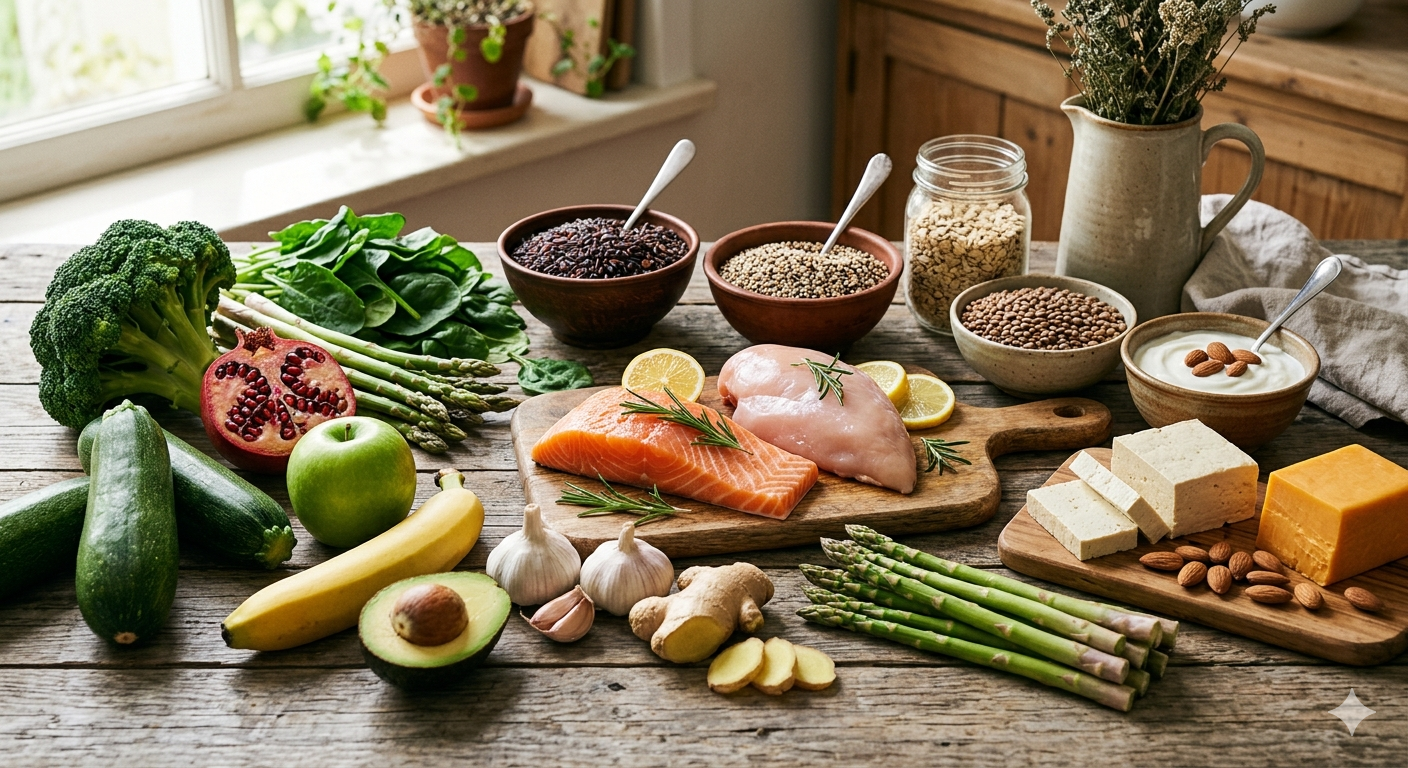
  • Apple: Crisp, round fruit with red, green, or yellow skin.
  • Banana: Long, curved fruit with sweet flesh and yellow peel.
  • Broccoli: Nutrient-dense green vegetable with a thick stalk.
  • Spinach: Dark green leafy vegetable eaten raw or cooked.
  • Garlic: Strong-scented pungent bulb used to flavor cooking.
  • Avocado: Pear-shaped tropical fruit with rich, green flesh.
  • Pomegranate: Round red fruit containing sweet, juicy seeds.
  • Zucchini: Long green summer squash with watery flesh.
  • Asparagus: Long, slender green shoots harvested in spring.
  • Ginger: Spicy aromatic root used fresh, dried, or powdered.
Grains, Dairy & Proteins
  • Rice: Small grain seeds harvested from marsh grass.
  • Quinoa: Highly protein-dense seed crop from South America.
  • Oats: Cereal grain typically cooked with liquid for oatmeal.
  • Yogurt: Creamy food product made by fermenting milk.
  • Cheese: Solid dairy product made from pressed milk curds.
  • Salmon: Fatty pink-fleshed fish highly valued for Omega-3.
  • Chicken Breast: Lean white meat harvested from poultry.
  • Lentils: Tiny edible pulse seeds popular in stews.
  • Tofu: Bean curd food made of coagulated soy milk.
  • Almonds: Sweet, oval edible nut seeds from orchard trees.
UKML

Topic 2 Practice: Vocabulary & Grammar

Exercise 1: Vocabulary Match

Match the vocabulary word on the left with its correct definition on the right.

WordAnswerDefinition / Characteristic
1. Avocado[ ]A. A pink-fleshed coldwater fish highly valued for healthy Omega-3 oils.
2. Salmon[ ]B. A green, pear-shaped tropical fruit packed with healthy fats.
3. Garlic[ ]C. South American grain seed prized for containing all nine amino acids.
4. Quinoa[ ]D. A pungent bulb belonging to the onion family used to flavor stews.
5. Spinach[ ]E. A leafy dark green vegetable that provides high concentrations of iron.
Exercise 2: Complete the Sentences
Salmon   |   Rice   |   Asparagus   |   Spinach   |   Almonds
  1. For my healthy post-workout lunch, I cooked a lean to obtain high-quality protein.
  2. On the side, I prepared a bowl of steamed white to supply complex carbohydrates.
  3. For nutrients, I chopped up green stalks and tossed them with raw leaves of fresh .
  4. Finally, to dress the plate, I sprinkled a handful of crunchy sliced over the greens.
Exercise 3: Categorization & Analysis
Part A: Dietary Sorting

Place the following items into their correct nutritional group:
Spinach, Quinoa, Cheese, Salmon, Oats, Avocado, Tofu, Yogurt.

Plant-Based ProduceGrains & SeedsDairy & Proteins
Part B: Nutrition Analytical Query

Why do nutrition scientists advise people to eat complex plant foods (like grains) instead of simple sugars? Write 3-4 sentences.

UKML

Topic 3: Drinks & Beverages

Hot Drinks, Cold Drinks, and Drinkware

Drinks & Beverages
Hot Morning Infusions & Teas
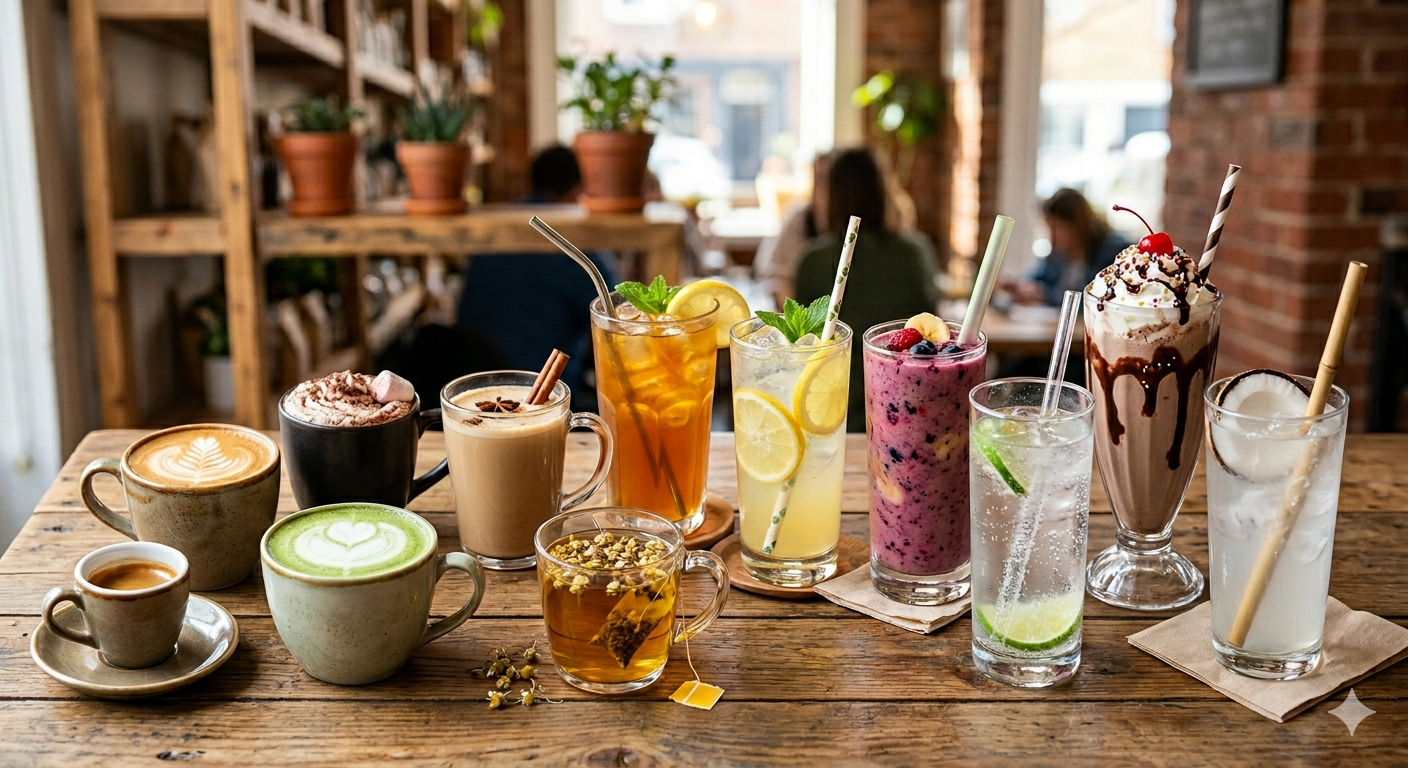
  • Espresso: Strong coffee brewed by forcing hot water through fine beans.
  • Latte: Mild espresso beverage with lots of steamed milk and foam.
  • Chamomile Tea: Herbal infusion famous for soothing, sleep-inducing effects.
  • Hot Chocolate: Warm beverage of milk, cocoa solids, and sweetener.
  • Matcha: Vibrant green tea powder whisked with hot water.
  • Chai: Spiced tea brewed with milk, ginger, cardamom, and black tea.
Cold Drinks & Drinkware
  • Lemonade: Cold sweetened drink made of squeezed lemon juice.
  • Smoothie: Thick cold beverage made of blended fruits and yogurt.
  • Sparkling Water: Water containing dissolved carbon dioxide for fizz.
  • Iced Tea: Cold tea infusion served directly over solid ice cubes.
  • Milkshake: Sweet beverage blended from milk, ice cream, and syrups.
  • Coconut Water: Clear fluid from young green coconuts, rich in electrolytes.
  • Mug: Robust, thick-walled cup with a solid handle for hot drinks.
  • Straw: Slender plastic or paper tube to transfer liquid to the mouth.
UKML

Topic 3 Practice: Vocabulary & Grammar

Exercise 1: Vocabulary Match
WordAnswerDefinition / Characteristic
1. Espresso[ ]A. A highly potent green tea powder whisked into a bright green froth.
2. Matcha[ ]B. Effervescent drinking water loaded with carbon dioxide bubbles.
3. Sparkling Water[ ]C. Made by squeezing tart citrus fruit and dissolving sweet sugar.
4. Lemonade[ ]D. A highly intense, dark shot of pressurized hot coffee oils.
5. Mug[ ]E. A thick cylindrical cup with a solid handle, ideal for warm tea.
Exercise 2: Complete the Sentences
Lemonade   |   Straw   |   Chamomile   |   Mug   |   Latte
  1. In the summer, I love sipping cold through a paper to stay refreshed.
  2. For a relaxing bedtime tea, I steep a bag of herbal inside a large clay .
  3. A rich consists of high-pressure espresso shots combined with lots of steamed dairy milk.
Exercise 3: Categorization & Analysis
Part A: Drink Categorization

Classify the items based on their temperature and chemistry profiles:
Chamomile, Milkshake, Espresso, Iced Tea, Latte, Coconut Water, Chai, Lemonade.

Hot Infused BeveragesCold / Chilled Servings
Part B: True or False Concepts

Write True (T) or False (F) in the space provided, and provide a 1-sentence reason below.

  1. Decaffeinated drinks carry higher concentrations of caffeine compared to regular espresso.
  2. Carbonated soda is naturally flat and does not contain any compressed gas bubbles.
UKML

Topic 4: Fashion & Clothing

Clothes, Accessories, and Fabrics

Fashion & Clothing
Everyday Wear & Outerwear
  • T-shirt: A simple, short-sleeved casual shirt.
  • Jeans: Sturdy casual trousers made of tough denim.
  • Sweater: A warm knitted garment worn over the upper body.
  • Hoodie: A casual sweatshirt with a hood attached to it.
  • Suit: A matching jacket and trousers worn for formal occasions.
  • Coat: A heavy outer garment worn outdoors for intense cold.
  • Jacket: A lighter outer garment, extending only to the hips.
  • Raincoat: A waterproof coat protecting against heavy weather.
Footwear, Accessories & Adjectives
  • Sneakers: Comfortable, rubber-soled shoes designed for sports.
  • Boots: Sturdy footwear covering the foot and lower leg.
  • Scarf: A fabric piece worn around the neck for warmth.
  • Belt: A band worn around the waist to hold trousers up.
  • Tie: A long, narrow piece of cloth worn with a collared shirt.
  • Baggy: Very loose-fitting clothing style.
  • Tight: Clothing fitting closely to the wearer's body.
  • Cotton: A soft, breathable, common plant-based fabric.
  • Wool: Extremely warm material made from sheep's fleece.
  • Leather: Premium material made from animal skin.
UKML

Topic 4 Practice: Vocabulary & Grammar

Exercise 1: Vocabulary Match
WordAnswerDefinition / Characteristic
1. Hoodie[ ]A. A warm piece of clothing made of wool, worn over a shirt.
2. Belt[ ]B. A piece of clothing worn on the head to block the sun.
3. Sneakers[ ]C. A sweater that has an integrated head-covering attached to it.
4. Sweater[ ]D. A leather or fabric band strapped around the waist.
5. Hat[ ]E. Comfortable, highly cushioned shoes for running or walking.
Exercise 2: Complete the Sentences
Coat   |   Gloves   |   Suit   |   Tie   |   Silk   |   Tight
  1. It's freezing outside today! Make sure you wear your warm and your on your hands.
  2. For the job interview, he wore a smart, dark blue with a red around his neck.
  3. She bought a beautiful scarf to wear to the opera; the fabric felt incredibly smooth!
  4. Those jeans look a bit too small. Are they too ?
Exercise 3: Categorization & Analysis
Part A: Item Sorting

Place the following words into the correct category:
Jacket, Boots, Dress, Scarf, Jeans, Gloves, Tie, Sandals.

Worn on the BodyFootwearAccessories
Part B: Describe the Outfit

Imagine you are going to a formal party tonight. Write 3–4 sentences describing what you are going to wear, including specific colors and materials.

UKML

Topic 5: Jobs & Professions

Jobs, Careers, and Work Skills

Jobs & Professions
Traditional Professional Occupations
  • Teacher: A person who helps students acquire knowledge.
  • Doctor: A qualified practitioner who treats patient illness.
  • Nurse: A person trained to care for the sick, assisting doctors.
  • Engineer: Designs and builds complex machinery or public works.
  • Chef: A professional cook heading a commercial kitchen.
  • Architect: A person who drafts and designs complex buildings.
  • Plumber: Installs and repairs piping systems and water fixtures.
  • Electrician: Tradesperson specializing in building electrical wiring.
  • Accountant: Inspects financial ledgers and tax accounts for businesses.
  • Journalist: Writes articles for newspapers or digital news websites.
Modern Tech & Career Terms
  • Software Developer: Specialist who programs software logic.
  • Data Scientist: Professional analyzing digital data for patterns.
  • Cybersecurity Analyst: Defends cloud networks against hackers.
  • Promotion: Advancement in rank or position within a company.
  • Salary: A fixed regular payment for professional work.
  • Interview: Formal meeting evaluating a job applicant.
  • Resume: Document detailing an applicant's work history.
  • Retire: Ceasing professional work permanently at an older age.
UKML

Topic 5 Practice: Vocabulary & Grammar

Exercise 1: Vocabulary Match
WordAnswerDefinition / Characteristic
1. Architect[ ]A. Diagnoses raw data, training machine learning algorithms.
2. Software Dev.[ ]B. Drafts high-resolution blueprint plans for new high-rise complexes.
3. Electrician[ ]C. Writes high-quality code logic using languages like Python.
4. Data Scientist[ ]D. Repairs copper wiring and fuses inside commercial buildings.
5. Journalist[ ]E. Keeps track of company expenses and audits financial ledgers.
Exercise 2: Complete the Sentences
Resume   |   Interview   |   Promotion   |   Salary   |   Retire
  1. To apply for the engineering job, Sarah submitted her formal detailing her skills.
  2. The manager invited top candidates to sit for a face-to-face next Monday.
  3. Because he achieved all targets, James received a major and a higher base .
  4. When the firefighter turned sixty-five, he was happy to finally and rest at home.
Exercise 3: Categorization & Analysis
Part A: Industry Categorization

Place the following careers into their correct sector:
Chef, Nurse, Electrician, Software Developer, Cybersecurity Analyst, Doctor, Plumber, Accountant.

Service & FinanceMedical & TradesSoftware & Technology
Part B: Career Planning Exercise

Identify your dream job. Write a short paragraph of 3–4 sentences explaining the core credentials and skills you need to achieve this goal.

UKML

Topic 6: Countries & Capitals

Countries, Capitals, and Geography

Countries & Capitals
Global Nations & Administrative Capitals
  • Japan: East Asian island nation; capital is Tokyo.
  • France: Western European hub; capital is Paris.
  • Brazil: Vibrant South American giant; capital is Brasilia.
  • Canada: Massive North American state; capital is Ottawa.
  • Australia: Southern continent-state; capital is Canberra.
  • Egypt: Ancient northeast African country; capital is Cairo.
  • Germany: Central European industrial leader; capital is Berlin.
  • India: South Asian giant; capital city is New Delhi.
  • South Africa: Multi-capital nation; administrative center is Pretoria.
  • United Kingdom: European island kingdom; capital is London.
Diplomatic Terms
  • Sovereignty: The authority of a state to govern itself entirely.
  • Embassy: Official residence or offices of an ambassador abroad.
  • Diplomat: An official managing treaties for a country abroad.
  • Border: Line separating two political countries or regions.
  • Treaty: A formally ratified agreement between sovereign states.
  • Currency: A system of money in common use within a nation.
  • Demographics: Statistical data relating to populations.
  • Continent: One of the world's main continuous expanses of land.
UKML

Topic 6 Practice: Vocabulary & Grammar

Exercise 1: Vocabulary Match
NationAnswerAdministrative Capital
1. France[ ]A. Canberra
2. Japan[ ]B. Tokyo
3. Australia[ ]C. Ottawa
4. Canada[ ]D. Paris
5. Brazil[ ]E. Brasilia
Exercise 2: Complete the Sentences
Embassy   |   Treaty   |   Diplomat   |   Sovereignty   |   Currency
  1. The foreign ambassador securely works inside the nation's located in the capital.
  2. To end the border dispute permanently, the leaders signed a historic peace .
  3. A highly skilled must speak multiple languages to represent their home country properly.
  4. Japan holds complete to govern itself and utilizes its own known as the Yen.
Exercise 3: Categorization & Analysis
Part A: Continent Sorting

Place the following capitals under their correct continent categories:
Cairo, Berlin, Ottawa, Tokyo, Paris, Brasilia, New Delhi, Canberra.

Eurasia (Europe/Asia)The Americas & OceaniaAfrica
Part B: True or False Geopolitics

Decide whether the statements are True (T) or False (F). Write one sentence to defend your choice.

  1. Ottawa is physically the largest city in Canada by overall population.
  2. Australia and Canada chose administrative centers rather than their biggest cities as capitals.
UKML

Topic 7: Global Geography

Continents, Oceans, and Landforms

Global Geography
The Seven Continents & Oceans
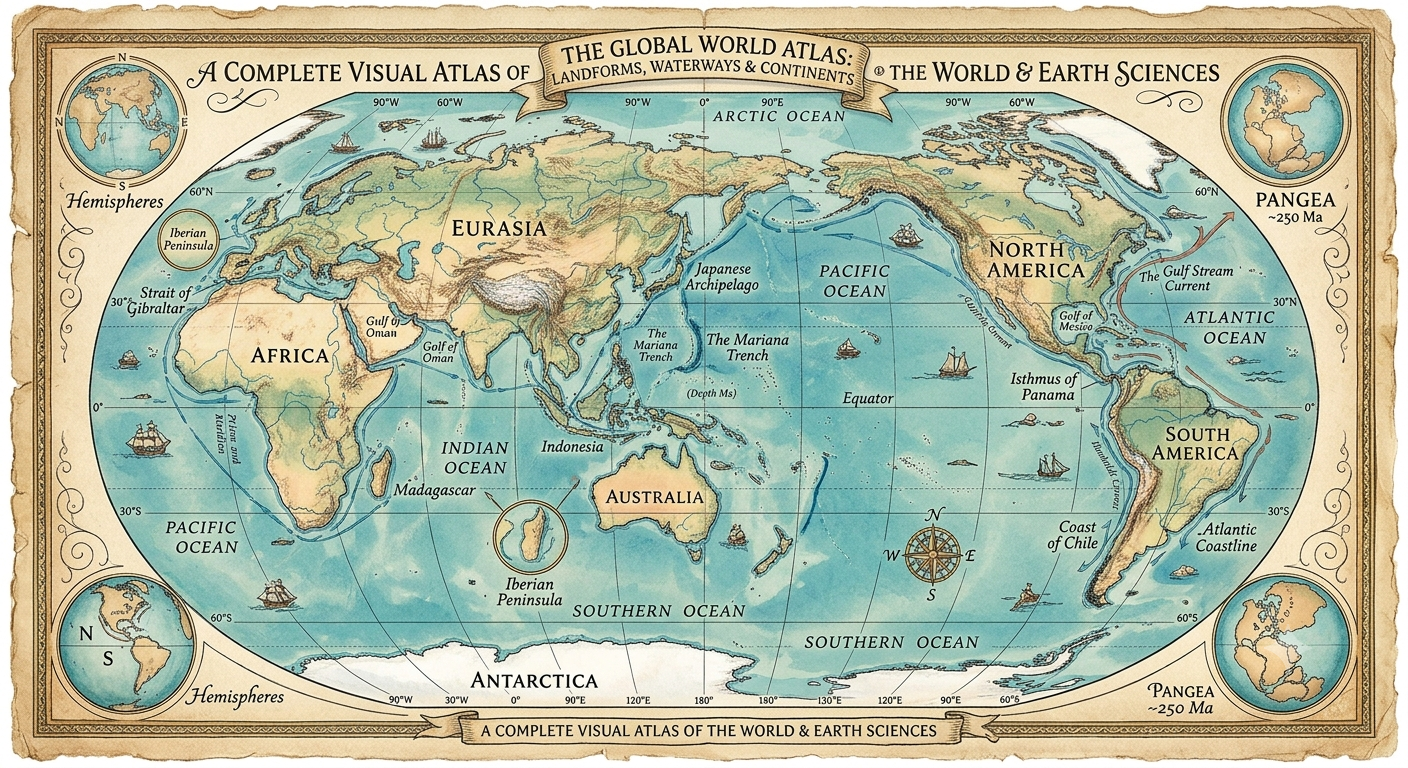
  • Asia: The largest and most populous continent on Earth.
  • Africa: Second-largest continent, home to the sprawling Sahara Desert.
  • North America: Northern hemisphere landmass bordered by three oceans.
  • South America: Landmass containing the biodiverse Amazon Rainforest.
  • Antarctica: The frozen, nearly uninhabited southernmost continent.
  • Europe: Westernmost peninsula of the massive Eurasia landmass.
  • Australia: The smallest island-continent bounded by the Pacific.
  • Pacific Ocean: The absolute largest and deepest marine division.
  • Atlantic Ocean: Basin separating the Americas from Africa and Europe.
  • Arctic Ocean: The shallowest, smallest northernmost marine basin.
General Geography Dictionary
  • Equator: Imaginary midline dividing Northern and Southern hemispheres.
  • Latitude: Degree measurements north or south of the Equator.
  • Longitude: Degree measurements east or west of the Prime Meridian.
  • Island: Any landmass completely encircled by water bodies.
  • Peninsula: Land spur protruding into water, bordered on three sides.
  • Trench: Abyssal depressions plunging down into the oceanic floor.
  • Coast: The geographical boundary zone interfacing land and sea.
  • Archipelago: A dense cluster or chain of scattered island formations.
UKML

Topic 7 Practice: Vocabulary & Grammar

Exercise 1: Vocabulary Match
WordAnswerDefinition / Characteristic
1. Antarctica[ ]A. The smallest, shallowest ocean located near the north pole.
2. Pacific Ocean[ ]B. The ancient supercontinent that united all global landmasses.
3. Africa[ ]C. The continent covered almost entirely in vast polar ice sheets.
4. Arctic Ocean[ ]D. The continent globally known for housing the massive Sahara Desert.
5. Pangea[ ]E. The largest, deepest continuous water basin on Earth.
Exercise 2: Complete the Sentences
Equator   |   Peninsula   |   Asia   |   Southern Ocean   |   Trench
  1. The absolute deepest, darkest part of the ocean is scientifically called a .
  2. The primary imaginary line that divides the Earth exactly into North and South is the .
  3. The icy, violent waters that continuously surround Antarctica compose the .
  4. A piece of land that is surrounded by water on exactly three sides is classified as a .
  5. The largest continent by both total physical land area and human population is .
Exercise 3: Categorization & Analysis
Part A: Land vs. Water Sorting

Place the items into their correct category:
Asia, Pacific, Europe, Atlantic, Australia, Indian, Arctic, Africa.

Continental LandmassesGlobal Oceans
Part B: Coordinate Navigation

If you are sailing in the ocean located directly between North America and Europe, which ocean are you navigating? Describe the climate you might face in 2-3 sentences.

UKML

Topic 8: Sports & Athletics

Sports, Games, and Physical Science

Sports & Aerodynamics
Sports Dictionary
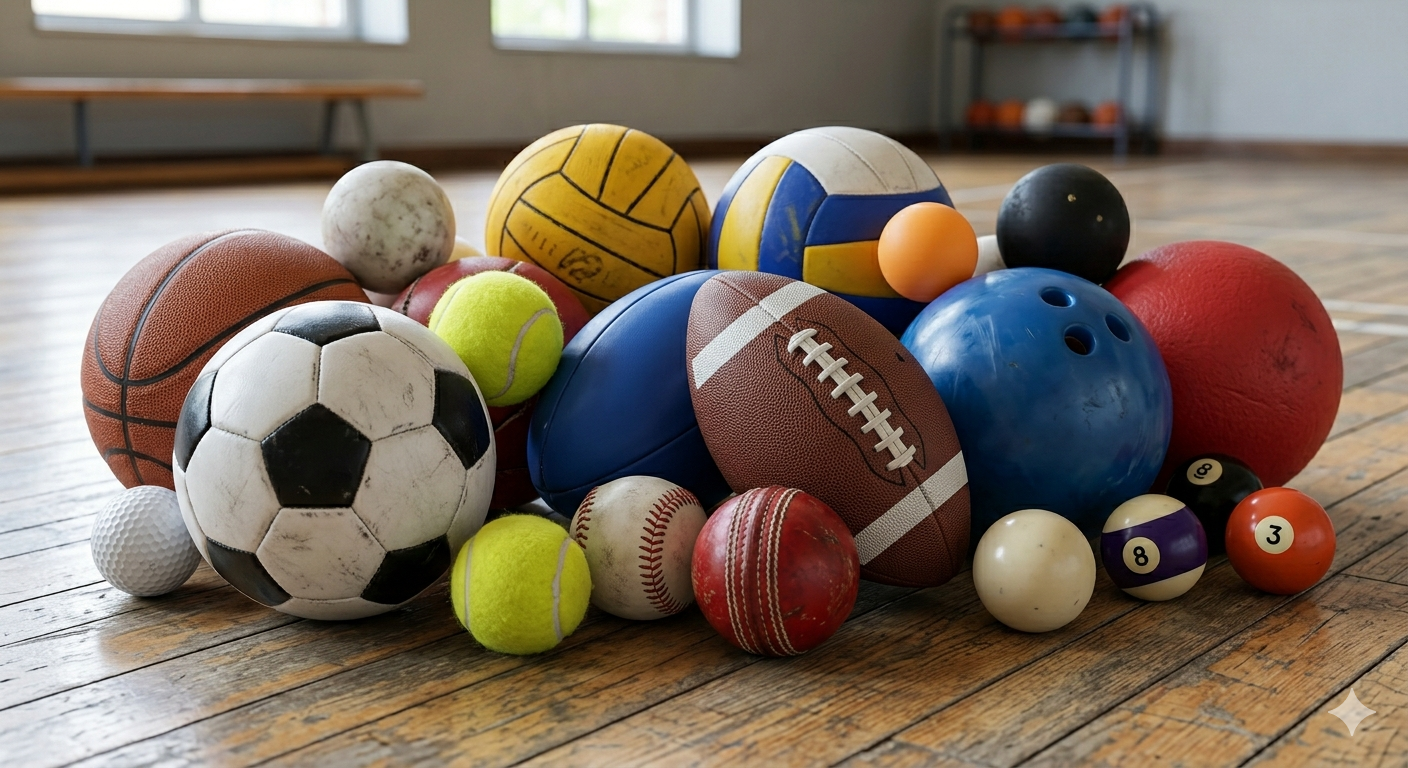
  • Soccer: Game maneuvering a sphere into a net without hands.
  • Basketball: Scoring via throwing an inflated rubber sphere through a hoop.
  • Tennis: Racket duel using pressurized felt-covered spheres.
  • Baseball: Diamond game striking a hard leather ball with a bat.
  • Rugby: High-impact sport passing an oval prolate spheroid backward.
  • Golf: Targeting small dimpled spheres into holes using titanium clubs.
  • Table Tennis: Rapid game using paddles and hollow celluloid balls.
  • Billiards: Propelling resin balls into pockets on a slate table.
  • Squash: Racket game in a 4-walled court using a squishy rubber ball.
  • Lacrosse: Throwing a solid rubber ball using netted mesh-tipped sticks.
Ball Types & Science
  • Sphere: Perfectly round, three-dimensional geometric shape.
  • Prolate Spheroid: Elongated, oval-shaped geometry with blunt ends.
  • Dimples: Indentations creating a boundary layer that slashes drag.
  • Seams: Stitched lines holding outer panels of leather together.
  • Bladder: Air-tight internal rubber reservoir holding pneumatic pressure.
  • Felt: Wool cover of tennis balls that catches wind to create lift.
  • Hollow Core: A ball featuring an empty, gas-filled chamber inside.
  • Solid Core: Extremely dense interior construction providing momentum.
  • Drag: Mechanical wind resistance opposing a forward flight vector.
  • Trajectory: The curved flight path dictated by velocity and gravity.
UKML

Topic 8 Practice: Vocabulary & Grammar

Exercise 1: Vocabulary Match
WordAnswerDefinition / Characteristic
1. Prolate Spheroid[ ]A. Indentations on a golf ball severely reducing wind resistance.
2. Bladder[ ]B. The fuzzy wool fabric coating standard pressurized tennis balls.
3. Dimples[ ]C. Elongated oval shape with tapered ends, like a rugby ball.
4. Seams[ ]D. Raised stitching lines actively holding ball panels tightly together.
5. Felt[ ]E. Air-tight internal rubber sac safely holding the internal inflation.
Exercise 2: Complete the Sentences
Squash   |   Hollow   |   Pebbling   |   Seams   |   Puck
  1. Ice Hockey doesn't use a sphere at all, but rather a flat vulcanized rubber that glides.
  2. Basketball players can easily maintain full dribbling control because of the rubber texture.
  3. A baseball pitcher relies exclusively on the raised to get a solid finger-hold to throw a curve.
  4. A ping-pong ball is incredibly lightweight because its plastic interior is entirely .
  5. is an intense indoor racket game played inside a 4-walled room utilizing a small rubber ball.
Exercise 3: Categorization & Analysis
Part A: Projectile Construction Sorting

Sort the following sports based on the internal construction of their primary ball/projectile:
Table Tennis, Billiards, Soccer, Golf, Basketball, Lacrosse.

Solid CoreHollow (Gas/Empty)Inflated Bladder
Part B: Aerodynamic Analysis

Why does a golf ball traveling with a high spin velocity fly much further with dimples compared to being completely smooth? Write 3-4 analytical sentences explaining air drag.

UKML

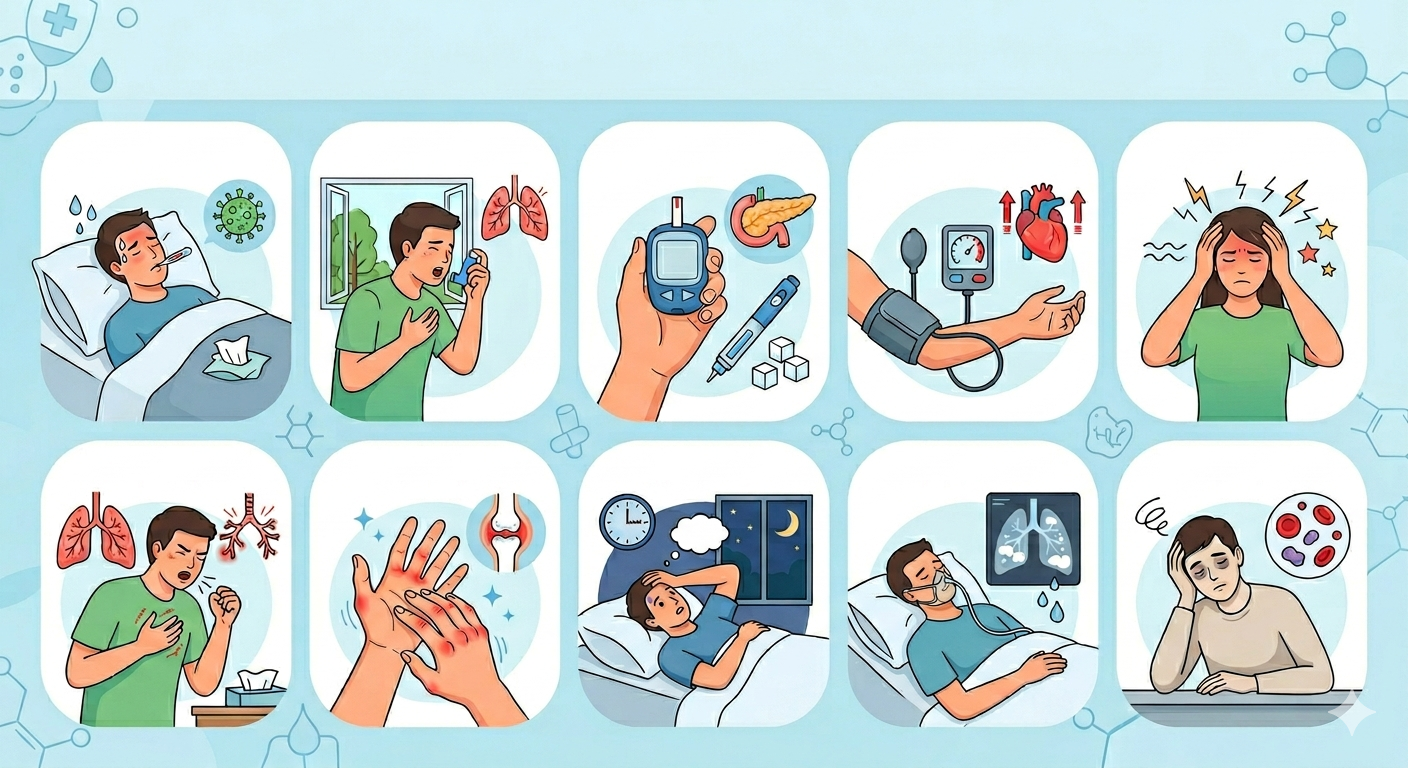
Topic 9: Health & Medicine

Symptoms, Diseases, and Medical Terms

Medicine & Health
General Health & Symptoms
  • Symptom: A physical feature indicating a condition of disease.
  • Diagnosis: Identification of an illness by examining symptoms.
  • Prescription: Doctor's instruction authorizing a patient to receive medicine.
  • Fatigue: Extreme tiredness resulting from exertion or illness.
  • Nausea: A feeling of sickness with an inclination to vomit.
  • Immunity: The ability to resist a particular infection or toxin.
  • Vaccine: Substance used to stimulate immunity to infectious diseases.
  • Inflammation: Condition where part of the body becomes red and swollen.
  • Therapy: Treatment intended to relieve or heal a physical disorder.
  • Contagious: Easily spread from one organism to another by contact.
Pathology & Diseases
  • Influenza: Highly contagious viral infection of the respiratory passages.
  • Asthma: Respiratory condition marked by spasms making it hard to breathe.
  • Diabetes: Metabolic disease leading to abnormal blood glucose.
  • Hypertension: Abnormally elevated blood pressure in the circulatory system.
  • Migraine: Recurrent throbbing headaches localized to one side.
  • Arthritis: Painful, stiffness-inducing inflammation targeting bone joints.
  • Insomnia: Chronic, exhausting inability to obtain adequate sleep.
  • Pneumonia: Severe inflammation filling lung air sacs with fluid.
  • Anemia: Clinical deficiency of oxygen-carrying red blood cells.
UKML

Topic 9 Practice: Vocabulary & Grammar

Exercise 1: Vocabulary Match
WordAnswerDefinition / Characteristic
1. Asthma[ ]A. Elevated levels of glucose (sugar) trapped circulating in the bloodstream.
2. Insomnia[ ]B. Joint inflammation resulting in extreme swelling and physical stiffness.
3. Fatigue[ ]C. Habitual sleeplessness and inability to safely fall asleep at night.
4. Arthritis[ ]D. Extreme physical or mental weariness and dangerous lack of energy.
5. Diabetes[ ]E. Difficulty breathing accompanied by spasms inside the lungs.
Exercise 2: Complete the Sentences
Contagious   |   Prescription   |   Nausea   |   Vaccine   |   Diagnosis
  1. The specialist gave me a for heavy antibiotics to clear up the infection.
  2. After eating the spoiled seafood, he felt a sudden wave of and had to lie down.
  3. It is critical to wash your hands often because the flu virus is highly .
  4. The researchers worked tirelessly to develop a reliable to prevent the virus spread.
  5. After thoroughly reviewing the blood tests, the specialist finally made a correct .
Exercise 3: Categorization & Analysis
Part A: Clinical Sorting

Place the following medical terms into their correct category:
Migraine, Fatigue, Vaccine, Diabetes, Nausea, Prescription.

Symptoms / FeelingsDiseases / ConditionsMedical Treatments
Part B: True or False Check

Write True (T) or False (F) in the space provided. Add 1 sentence correcting the false statements if any.

  1. Hypertension is another medical term representing dangerously low blood pressure.
  2. Anemia is triggered when the blood contains severely deficient levels of red blood cells.
UKML

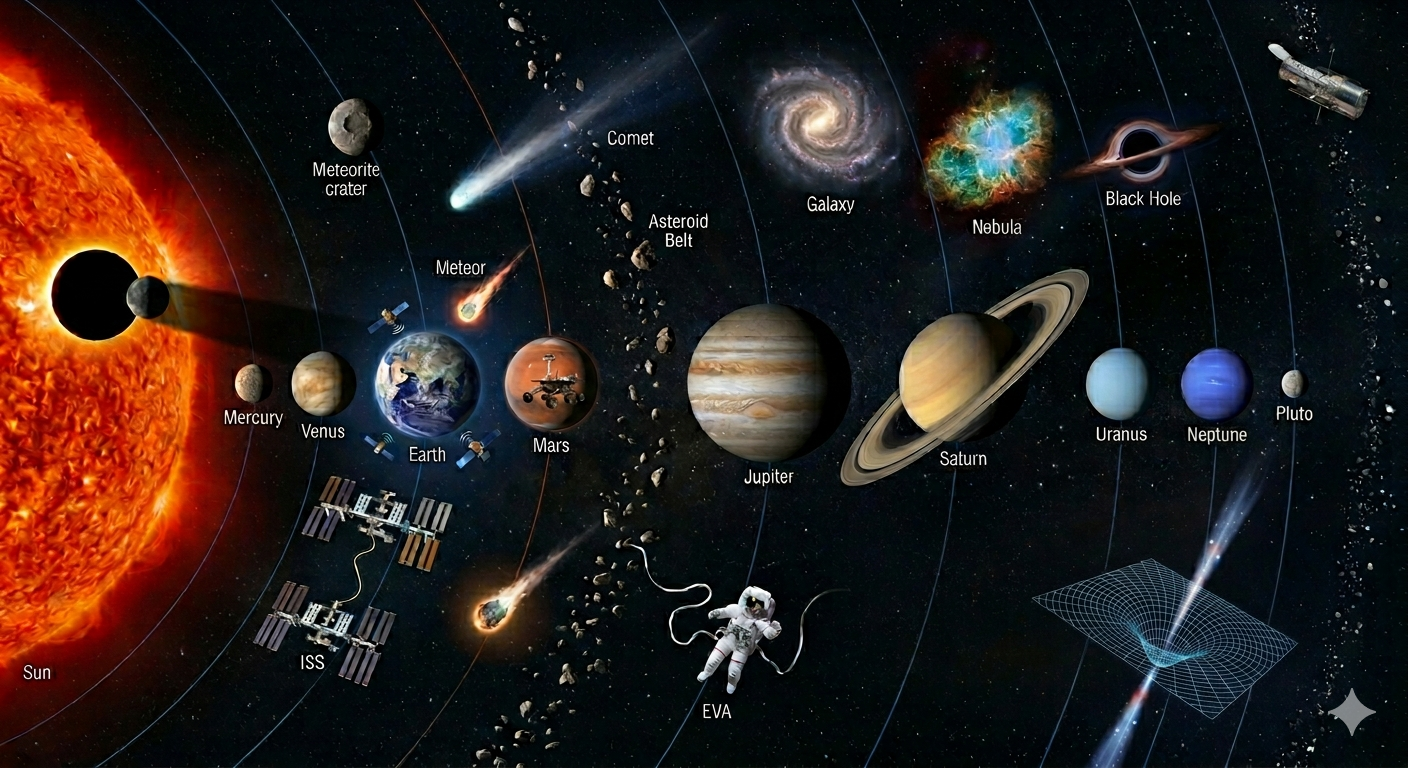
Topic 10: Space & The Cosmos

Planets, Stars, and Space Exploration

Cosmos & Space
Solar System Planets
  • The Sun: The star around which the earth and other planets orbit.
  • Mercury: The smallest and closest planet to the Sun.
  • Venus: Second planet boasting a thick, toxic greenhouse atmosphere.
  • Earth: Third planet from the Sun and only known body harboring life.
  • Mars: "Red Planet" covered in extensive iron oxide dust.
  • Jupiter: Gargantuan first gas giant boasting the Great Red Spot.
  • Saturn: Spectacular ringed giant flanked by icy orbiting ringlets.
  • Uranus: An ice giant uniquely rotated completely on its side.
  • Neptune: The windiest, deepest blue ice giant at the outer edge.
  • Pluto: Classified as a "dwarf planet" located in the Kuiper Belt.
Cosmic Objects & Exploration
  • Asteroid: Rocky, airless relic orbiting the Sun between Mars and Jupiter.
  • Comet: Icy snowball that grows a magnificent tail nearing the Sun.
  • Meteorite: Cosmic rock that successfully penetrates the atmosphere to strike ground.
  • Galaxy: Massive gravitationally bound cosmic island composed of stars.
  • Nebula: Massive, vibrant cloud of gas and dust where stars are born.
  • Black Hole: Superdense void of gravity light cannot escape.
  • Supernova: Luminous cataclysmic explosion of a massive dying star.
  • Orbit: Recurring curved trajectory of an object around a barycenter.
  • Gravity: Invisible pull force drawing matter toward dense centers.
  • Rover: Automated robotic buggy exploring distant planetary surfaces.
UKML

Topic 10 Practice: Vocabulary & Grammar

Exercise 1: Vocabulary Match
WordAnswerDefinition / Characteristic
1. Venus[ ]A. A giant, vibrant space cloud where young stars are actively born.
2. Nebula[ ]B. A robotic, wheeled vehicle engineered to explore planet surfaces.
3. Gravity[ ]C. The hottest planet in our solar system, trapped in a greenhouse effect.
4. Rover[ ]D. An icy, frozen body that develops a glowing tail near the Sun.
5. Comet[ ]E. The invisible fundamental force that pulls massive objects together.
Exercise 2: Complete the Sentences
Atmosphere   |   Milky Way   |   Saturn   |   Telescope   |   Eclipse
  1. During a total solar , the moon completely blocks the light radiating from the Sun.
  2. Our solar system is safely located inside a massive spiral galaxy known as the .
  3. Earth's heavily protects us from dangerous radiation and keeps our planet warm.
  4. is a massive gas giant easily recognized by its complex rings made of ice.
  5. Galileo was one of the first human scientists to utilize an optical to observe the moon.
Exercise 3: Categorization & Analysis
Part A: Cosmic Sorting

Place the following entities into their correct classification:
Jupiter, Comet, Earth, Black Hole, Asteroid, Saturn.

Planetary BodiesDeep Space Phenomena & Rocks
Part B: True or False Cosmos

Write True (T) or False (F) in the space provided. Add 1 sentence correcting the false statements if any.

  1. Mars is widely called the "Red Planet" because its entire surface is covered in hot, flowing lava.
  2. A supernova represents the catastrophic and luminous explosion of a massive dying star.